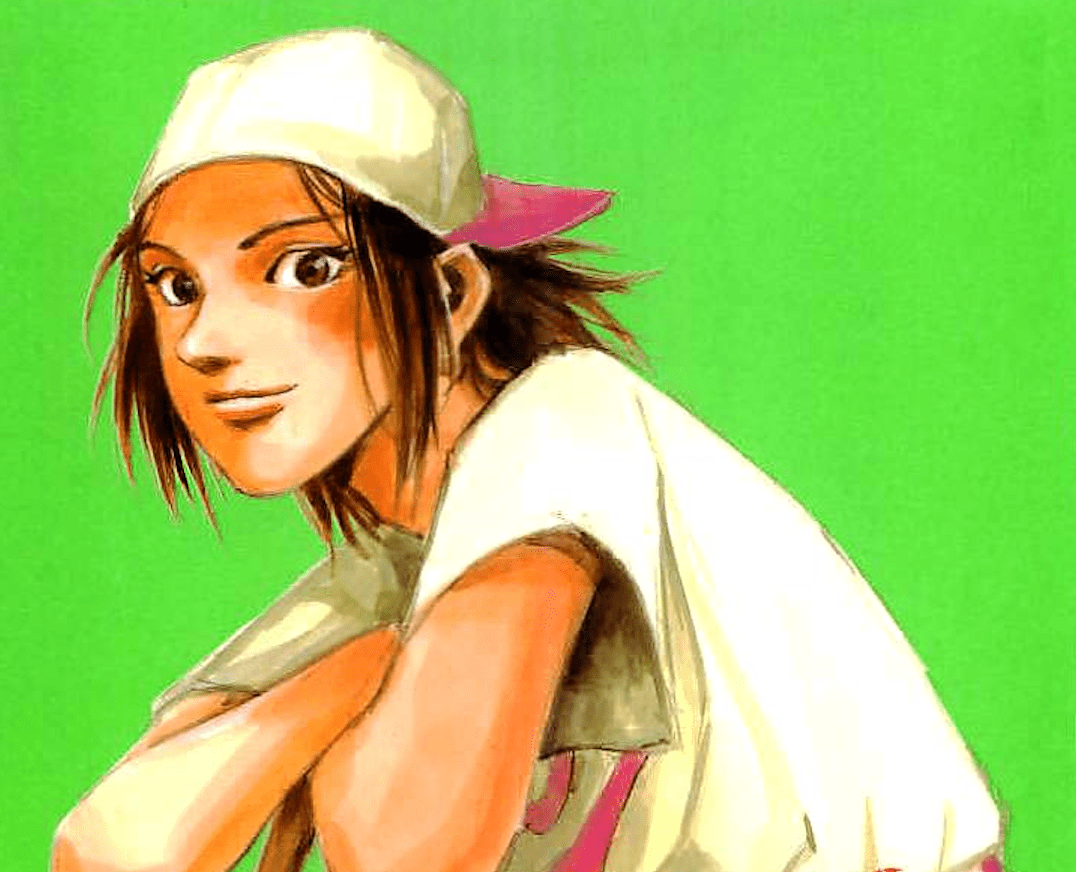
As I continue to read manga, I often wonder how much of its material is lost on me. You can identify the cultural novelty within a series; a religious practice, a dialogue seeped in collectivist ideals. But is what it actually means lost on me? Reading Tetsuwan Girl, it’s easy to feel like this series wasn’t written for you. It’s decisive in its plot, and very happy to take sides on historical events. A recurring sense I got was that the reader (me) has a large part to play in how this series comes across. If you agree with the message, it can be cathartic; disagree, and it’s self-indulgent. If you’re happy to see it as a work of an impassioned artist, who stays true to their ideals, you’ll probably get the most out of it.
The story begins at Japan’s defeat in the Second World War, with the nation now under American occupation. Bar maids are recruited to become part of the inaugural women’s baseball league. Hoping for a better life, Tome Kano falls in love with baseball, and intends on forming her own team, a commitment to fight for her own (and later, the who of Japan’s) destiny. It very quickly transcends baseball and becomes a game of politics, in which the stakes are far greater than results on the diamond. What exactly Tome intends to emancipate herself from shifts throughout the story, but as she wades through conflict on both a national and international scale, you learn how many barriers there can be in recovering a sense of pride, respect and freedom.
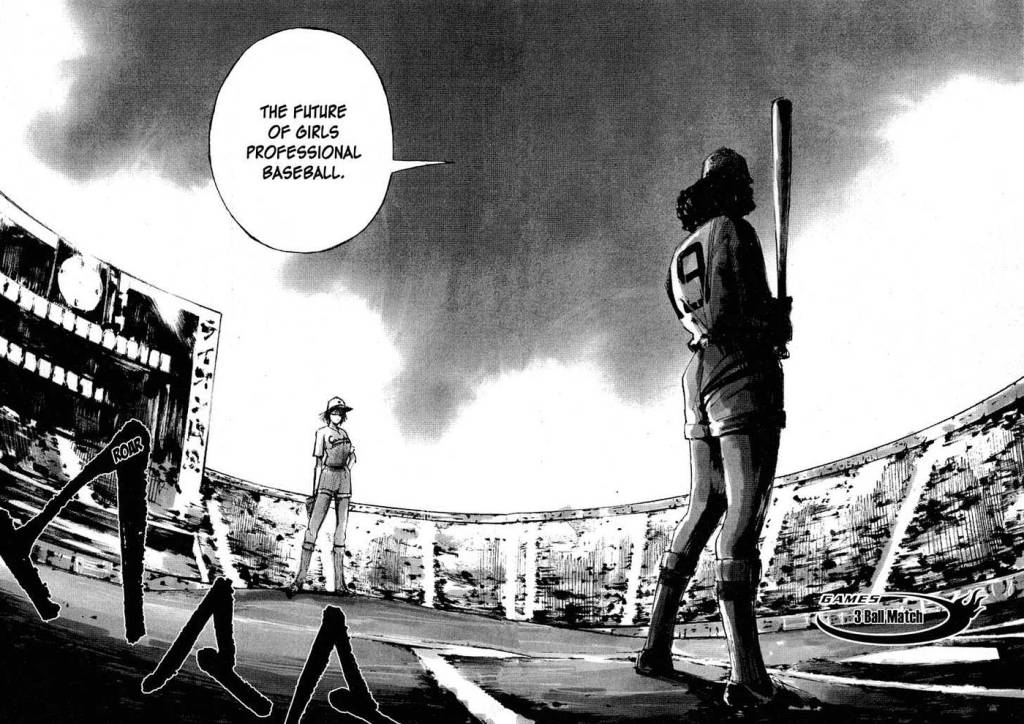
The facade of a baseball manga is slowly dropped after the first third of the series. While not at the forefront of the story, Takahashi’s art, with it’s dark, noirish scrawl, adds drama and a sense of epic-ness to these confrontations. All in all, there are only a handful of baseball games, but they were always enjoyable, and their significance always apparent. I also appreciated that they did not outstay their welcome; the author never fought to upstage each moment, more dramatic than the next, which can lead a sports manga to exhaust its reader. The stakes I mentioned were, for the most part, at their clearest during these matches, easy to follow and simple in resolution.
Unfortunately, when you become a symbol, it’s hard to walk among men. When Tome is identified as the great Japanese emancipator of this story (by both her colleagues, and the author himself), a part of her is lost. Kano’s relationships with others become unnatural. Kano’s idolic status makes her the perfect martyr; as a sacrifice, these grand situations she finds herself in make sense. But in a very short period of time, she goes from traumatised bar maid to pro athlete to politicking with international leaders, without much explanation as to how. By the end of the series, she’s lost her relatability. It’s up to the reader to tease apart whether Tome Kano embodies the vox populi, or a static character.
In-between, as you try to piece the story together, it can be jagged, jarring and at worst, uninteresting. There has to be, some might say, some commendation for the author’s complete lack of subtlety. Takahashi’s feelings were not woven into the story, but stamped, so much so that they contort the plot into a somewhat fantasy. The protagonist was not just important for the story, but the artist too. She clearly represented something of historical, nationalistic and ideological significance.
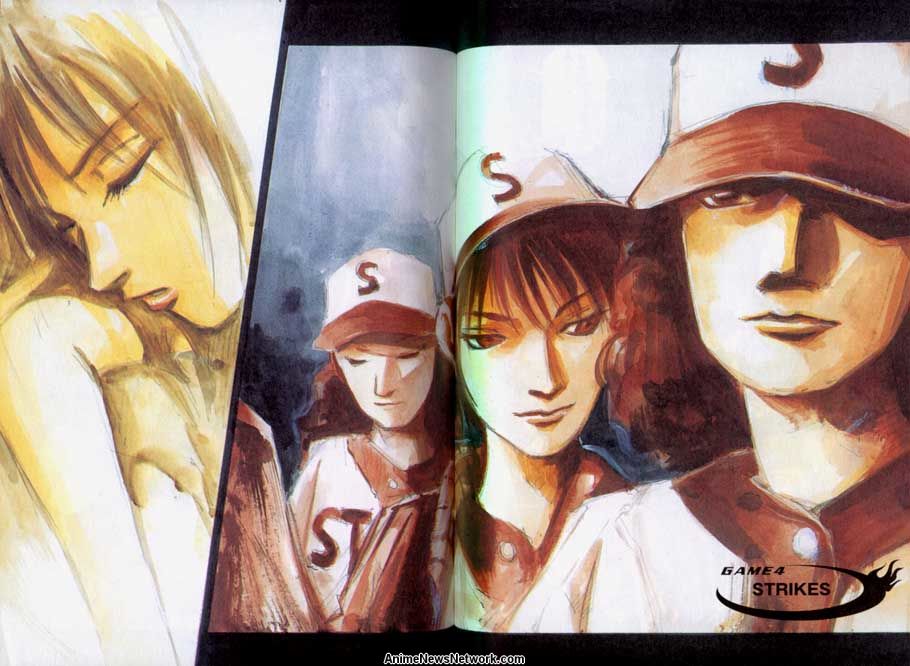
I had a moment after finishing this manga. It’s easy to try and get too academic with a reading experience. To try and find ‘objectivity’ within an artwork; art that is ‘objectively’ good, stories and characters that are ‘objectively’ sensible and complex. While reading Tetsuwan Girl, I could identify some of those ‘objectivities’. But sometimes, it doesn’t matter how something is said, but more so, does the writer actually have something to say. Something of substance, whether it makes sense to you, or is written to your preference. I didn’t expect to be reminded of that by Tetsuwan Girl, and when I was, I enjoyed it a lot more.
Series Details:
Story & Art: Tsutomu Takahashi
Length: 9 Volumes (92 Chapters)
Duration: 2000 – 2002
Publisher: Kodansha
 Ripe Mangoes